Showing posts with label Parable of the sower. Show all posts

Tuesday, April 2, 2019

April II: Return of the Alex

God is neither good
nor evil,
neither loving
nor hating.
God is Power.
God is Change.
We must find the rest of what we need within ourselves,
in one another,
in our Destiny

p.245

You guys know I'm a week behind in class discussions, so pardon me if this calls for redundant conversation.

I was trying to find a quote that really summarized the book or at least a major theme, and this is the closest I came. Not only is this quotation something pretty close to how I view the world (putting a lot of importance on human autonomy), but it also seems to set out some of the rules that a utopia needs to exist.

With that in mind, what is the utopia in this book/the reason for us reading it in this class? Is it Acorn? Is it all in Lauren's head and on the pages of her journal? Is it the decaying United States and the de facto rules governing society?

Among the Stars


https://youtu.be/3Kf-FlECN7M

Suns and Stars, a beautiful piece by orchestral composition group Really Slow Motion, is a tune that played in my head throughout this section of the reading. Watching Lauren's group grow, slowly at first, then rising to a crescendo of hope as the group approaches Bankole's land, then the abrupt de-escalation at the devastation they find, before a new hope blooms again.

Monday, April 1, 2019

The Purpose of Hyperempathy

There is a lot of killing, a lot of death, in Parable of the Sower. Lauren isn't a evil person; she only kills in self-defense. But I can't help to think that even self-defense must hurt, even for people without empathy. She kills because it's her or them. But they're people, too, with families, goals, aspirations. It's hard for me to not have empathy for those who are murdered, and I think the hyperempathy has us thinking about how the strangers who die and who Lauren feels die are more than just numbers for the body count.

So yeah, the quote:
"Take my word for it. Bad, bad idea. Self-defense shouldn't have to be an agony or killing or both. I can be crippled by the pain of a wounded person. I'm a very good shot because I've never felt that I could afford to just wound someone... The worst of it is, if you got hurt, I might not be able to help you. I might as crippled by your injury---by your pain, I mean---as you are" (278).

Identity and Displacement

Parable of the Sower mentions race casually but matter of factly. Lauren's well aware of what others think of her appearance, even pulling a Rosalind from As You Like It and dressing up as a man for safety while traveling, seemingly confident that her race both immediately allies her with other minorities and jeopardizes her safety with whites.  For example, this line highlights the apparent continued disparity of respect and community between the races: "Of course, it didn't help that he was black. Being white might help you win people over faster than he did" (Butler 320). I don't know how much of this concept and issue of racism and/or prejudice stems from the reality of it during the time this book was written, but I feel that it serves to highlight the importance of each characters' background. The final symbolism of each character "find[ing] the words" to represent those they've lost, and therefore their roots, solidifies the new age dawning, rising from the ashes of a burning world, to create a community of Earthseed (Butler 327).

Her race is neither given entirely as a hindrance or a benefit; instead, it enables readers to see the amount of distrust and displacement all of the survivors in this world face. Shared skin enables a more immediate reliable relationship, and seeing how Lauren's neighborhood was predominantly black, it's fascinating to see how her hodgepodge group of budding 'Earthseeders' has all types of people - blacks, whites, Hispanics, etc. The world is changing, and so is their identity and 'religion'. Despite this, up through the final chapter of the novel, Butler includes this quiet-and-consistent detail of race, and it's one of the only times any of the utopias we've read do so. Earthseed is change, but it's also inspired by the people who follow it and dream for the stars - distant but free, where there is light and dark and hope rising from the chaos of a burning, distrustful, and broken world.

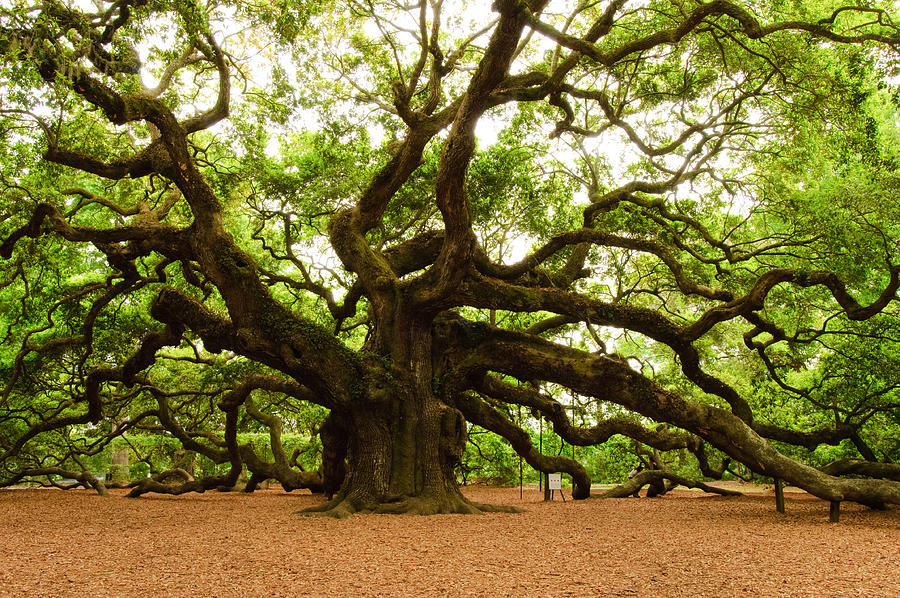
https://images.fineartamerica.com/images-medium-large-5/angel-oak-tree-2009-louis-dallara.jpg

The Long Defeat


"'Well, the group of us here doesn't have to sink any lower,' I said... 'I wish I believed that,' he said. Perhaps it was his grief talking. 'I don't think we have a hope in hell of succeeding here.'" (328)

I feel like this final interaction in the story is expressed perfectly by Thrice's song, "The Long Defeat." The title of the song comes from a Tolkien novel and  is "essentially about believing that there’s meaning to the good that you try to do and that you see in the world even when a lot of things would conspire to make you not believe that" (Dustin Kensrue). The whole song is basically about that belief. In the passage above it is clear that Lauren believes in fighting and surviving against the long defeat but Bankole doesn't. 

Apathetic towards Empathy

On finishing the novel, I did not see the point in. Lauren having ‘sharing’ or why it was really necessary to the plot of the novel. I know we found other settlers of Acorn that also had it. I know that it made Lauren’s journey through the wasteland much harder, but I found it made me feel less immersed in the middle of a battle when she would wound an attacker and then she too would be wounded. It took me out of the action scenes and made me want to know what was happening with Harry, Zhara, or the other travelers.

I’m interested to know how others felt about Lauren’s hyper-empathy? And did it enhance the reading experience for you? I wonder if Butler had a larger plan for the Empaths in the trilogy and this novel was just the introduction.

Don’t Drink the Kool-Aid


Lauren says, “This world would be a better place if people lived according to Earthseed. But then, this world would be better if people lived according to the teachings of almost any religion.” Bankole asks, “Why do you think they’ll live according to the teaching of yours?” Lauren doesn’t answer this question (247).

Belief systems seem to have the ability to either divide or unite during times of unrest. Lauren is completely convinced that her Earthseed is some sort of “answer” to the problems she’s run away from and wants everyone she meets to agree with her. Yet she has no reason for why people should agree with her, and doesn’t seem to care when there are people who question her.

Thursday, March 28, 2019

Short questions?

Do you see see the Parable of the Sower as a anology for purgatory?

What flaws if any do you have with Luaren and Earthseed?

Do you see any parallels between this book and today’s society?

Will this book makes Baughman’s list of books that make him go hot damn?

On Keith's death

I've been thinking a lot about Keith. Although he seemed pretty predisposed to being a horrible person, his death speaks to the different levels of horrible that people are capable of being outside of the neighborhoods. Although Keith maims someone will a gun to take their stuff (likely fatally), he comes from a place of wanting to provide for himself and his family. The way that Keith's body is found is to suggest that he pissed off someone who was on a new level of a horrible person. Because of the useless police investigation, I am still left wondering so much about the details of Keith's death and more so why there is a lack of them. Is it at all surprising that Keith was killed the way that he was? Was he destined to reach the level of horrible that drug cartels are capable of? Was he destined to paint his head and light himself on fire? Or, alternatively, was Keith's death a freak accident, and was he onto the right idea about how to make more money for his neighborhood?

Lauren

I actually had something to mention from the conversation we had on Tuesday. We talked about how we view Lauren as a character herself. And I found a passage in the beginning of the novel to really speak to her personality and character a lot. It is on page 7, where she talks about her fathers God and how it is different from her God. For one, I thought it was interesting the amount of God and religion is mentioned in this novel. Knowing that Lauren believes in a God, but not the same one her father did, confused and intrigued me. I can relate to this on some level due to my upbringing and religion, but I won’t get too much into that, other than the fact that I can understand not believing in the same things your parents/family do. Aside from that, this paragraph at the beinning of chapter two shows who Lauren is and a big part of her personality. This shows her individuality, her need to separate herself from others, her curiosity, and her reblousness. On another note though, this passage shows how she is scared to rebel as well. She does not believe in the same thing as her father and yet continues to pretend and act like she does, therefore showing how she is still hesitant and in fear of the outside and everything else she does not know. All of these things are then built upon through out the book but I noticed them all within this paragraph alone.

Wednesday, March 27, 2019

Me VS We

Throughout the course of the novel our main character and her family members and friends are consistently confronted with the factors of choosing between themselves and the group. There is the instance of Cory finally admitting that she cares more for Keith than she does Lauren. There is the instance of Harry deciding whether or not to leave Lauren after she reveals her empathy to the two survivors of the cul-de-sac fire. When does ‘we’ become ‘me’ and when are instances where one must unite? In the beginning of Chapter 17 

“Embrace diversity.
Unite-
Or be divided,
Robbed
Ruled,
Killed
By those that see you as prey.
Embrace diversity or be destroyed.” (Butler 541, Digital copy.)

Is it possible to survive alone in this dystopia? Or do all loners end up like Keith or his victim that is hiking to Alaska? When would an instance of division instead of unity be the best course of action?

That escalated quickly

At the end of the 2026 sections is dramatic irony. Lauren's initial conclusion on Wyatt Talcott and his fate is that "he may not live much longer" and what makes it ironic is the fact that the cul-de-sac gets raided in July of the next year (149). It's probably safe to assume that Wyatt lived longer than everyone else. This sudden onslaught of carnage should be as surprising to the reader as it was for Lauren as she lived through the moment. At this point in the story, the reader should have some kind of emotional connection to most of the characters who die and, if not the characters, then the cul-de-sac they all lived on which was, in a way, a character. At this point in the book, it may be that this destruction of the cul-de-sac is the turning point in the story, hopefully. What else could possibly go wrong?

Let’s talk about the Sower

I went to pick up my book when it hit me that Lauren is the sower of Earthseed that the title references, and in a sense one could read this book as a religious text.

I went down a deep rabbit hole of thought and managested in my mind appeared the complicated idea of comparison to this book, (the life of Lauren), to something like the gospels of the New Testament, (which is the story of a Jesus through the eyes of his disciples).

It then became obvious that this book is actually structured as a religious text, each new chapter with verses and titles. I don’t quite know how to articulate the way this book makes me feel but it’s disturbing to me for maybe a reason I can’t put my finger on.

Yet it is pleasing to see a that group of people has found peace with one other in spite of the hell that surrounds the. The group is diverse in age, race, and backgroun, but they share the common religious beliefs of Earthseed, and follow its creator, the Sower of a Earthseed Lauren. I thought it was nice that despite the horrors nested in between the first and last page of the book, the final scene ends somewhat peacefully with the community of Acorn established and the group finely having a chance to rest.

Tuesday, March 26, 2019

Dogs, beasts or pets?

When I came across the passage about dogs on page 40, reading how Lauren describes them in their different roles in society really got me thinking. Specifically when she said "Rich people still keep dogs, either because they like them or because they use them to guard estates..." (Butler 40). In my head I was picturing the classic "Beware Of Dog" signs that people put on their gates and doors, but then y mind jumped to a certain movie. I am sure we all know this movie and will know what I am talking about once I say the same, The Hunger Games. In The Hunger Games there are wild vicious dogs that are sent after Katniss and Peta. In Hunger Games the districts do not own dogs as pets, but the Capitol (where the rich people are) does have dogs that are domesticated (if I am remembering correctly). I thought this might be a stretch of a connection, but it seemed worth sharing anyway.


Close to home

Octavia Butler's Parable of the Sower strikes a note that our other readings have not. The setting is not some vague, distant future like Brave New World or Caves of Steel, nor is it a clear fabrication of the past, like Herland Or Utopia. Instead, Butler gives us concrete dates, beginning in July 2024. The vision of a world where communities must wall themselves for safety, the primary use of petroleum is arson, and so much else seems all too real for a book set to begin just five years from now.

Monday, March 25, 2019

Space! Or No?

My question for the day comes from the debate between Lauren and her father, applied to a modern-day debate. Is it feasible to think about starting to colonize other planets with over population continuing to occur? Or is it better (an more cost efficient) to find new ways to create a comfier, healthier way of life on Earth without making any of the populace uncomfortable or putting them in a ‘bad position’ (this could mean a number of bad things depending on which scope you’re viewing from).

Dogs

pill friends - wearing my dead dog's skin
i want to kill or to be killed
i pet my dog as i slit his throat
i skin him whole and i wear his furs
to school for looks now i feel good

i want to kill or to be killed
my dog licks me as he sinks into my meat
good boy he wears my tattered skin
to church for looks now they all know
i trust in hell
The parasitic relationship that humans have with dogs in this dystopian world has me thinking about the overwhelming lack of companionship and warmth is present within dystopian dogs. When we are unable to care for the things in life that give us comfort, such as cleanliness, dogs, and even a stable source of water, they become terrifying or their potential use is completely transformative. Dogs become something to fear, something to kill, and something to wear.
Bonus points for this song mentioning church, and school, for that matter, which both seem to be incredibly valuable to the neighborhood. Looking dirty and wearing filthy dead dog skins is a safe bet in not getting beat up. "I trust in hell" speaks to both the complicated relationship this book has with God and the state of affairs, playing on the term "In God We Trust," the motto of a state that seems to now have no concern for the livelihood of most people within in. 

credits


What Makes a Utopia?

While reading, I found myself thinking about the objectives and purposes of the worlds presented within the Utopia's we've seen. In Brave New World, people are decanted and bred for specific roles, and they are clean, safe, and sterile within their boundaries. The overwhelming drive behind their world is to live for pleasure and order. In The Caves of Steel, their New York City is run by a desire to live collectively and sustainably within their own bubble, however limited or dangerous that may be. Parable of the Sower, however, seems rooted in necessity, poverty, and survival. Lauren brings forth a lot of philosophical questions that not only reveal her current utopia, but one that she envisions for the future.

So, do Utopias stem from the thoughts and idealisms of the few or of the many? And what does the author reveal by the subtle (or unsubtle) forces at play within their world-building, as I mentioned above? So far we've been privy to Lauren's construction of an Earthseed philosophy that dithers on change. How is change important to Utopia - both in the ones we've seen (as used as contrasts to something bad or lesser) and the one(s) we strive for in our own reality?

https://sites.google.com/a/depauw.edu/the-parable-of-the-sower/_/rsrc/1472852703182/earthseed/strong__caring_hands_by_Rin_Uzuki.jpg?height=257&width=320

"Important things buried in the yard"

Parable of the Sower is very similar to Frank Hubert's Dune in that the story being told is from the past and the blurb before each chapter is from something in the present setting. The ending will probably be the beginning of a catastrophic event that eventually causes Lauren to grow up, mature, and preach her 'religion' that she is creating in the confines of this cul-de-sac she's in. Keith is a little shit, not going to lie, because he can't see the forest for the trees, or in this case, the borders of the cul-de-sac for the Earth. This story is a unique utopian story because it focuses on two things that weren't focused on before, like how, as Prof MB said best, utopian ideas come from individual people, and the other thing focused on is religion. The shift in perspective in general is a breath of fresh air.

Water, Water Everywhere nor Any Drop to Drink


Water is an essential part of human existence, yet it’s a rarity in this society. Lauren’s father wants an expensive baptismal even though he can’t afford it (11). The astronaut’s trip to Mars is considered a waste of time when the people on Earth are lacking such an important resource (15). Water has become more expensive than gasoline. Being dirty is fashionable because “If you’re clean… people think you’re showing off” (16). The neighborhood won’t bother calling the fire department when Amy Dunn starts a fire because no one can afford the expense (28). No one believes the radio report of an incoming storm (41).

The lack of water represents a lack of genuine, fulfilling life in Lauren’s society. Everyone is poor and miserable without this necessity. Lauren’s desires to leave reflect the desperation for water, or, symbolically, life. She reads survival books as she plans to leave home in the hope of finding, or creating, new life because her society is dying. “Nothing is going to save us,” she says. “If we don’t save ourselves, we’re dead” (51). Indeed, the authority figures aren’t doing much to provide life/water to society.